
Bold ideas, made physical.
From idea to product. From product to business.
Describe a smart device in plain words. Physily will design its circuit board, its case and its firmware, check each one, and show you what a unit costs to make.
We're building it now, and we'll invite people in small groups when it's ready.
Idea“A wireless stack light for any machine that shows red, amber or green, and that I can set from my phone.”

Products
Type one sentence, and our engines design the circuit board and the product around it, in the look you choose. Here are 2027 concepts made that way.
One board, three looks
The look is a choice, and the electronics stay the same. All three hold one circuit board, screen and battery, from one sentence: “A sensor that watches temperature and humidity and messages me when they drift.” Rendered from the real design files; not built yet.
-

Toy
A soft creature for a shelf, with the screen as its face.
-

Business
A slim plate for an office wall, in aluminium and dark glass.
-

Industrial
A bolted-down box with a cable gland and a steel sensor port.
2027 concepts
Each started as one sentence. Our engines turned it into a routed, checked circuit board and a full product design. Rendered from the real design files; not built yet.
Industrial
Bolted down, wired up and left alone: rails, terminals, metal and printed legends.
-
Idea“A wireless stack light for any machine that shows red, amber or green, and that I can set from my phone.”


Wireless stack light
A stack light with red, amber and green lenses, a buzzer and a Wi-Fi radio, so a phone can set it or read its state. It bolts to a machine through a slotted steel bracket and runs on 5 V from a USB-C lead.
- Board 28 × 217 mm, 2 layers, 144 parts
- Electrical rules, routing and manufacturing checks passed
- Column 60 × 250 mm on a 112 × 149 mm steel bracket
-
Idea“A DIN-rail box that reads my Modbus meters over RS-485 and sends the numbers out over LoRa.”


DIN-rail LoRa gateway
A control-cabinet module that connects to your Modbus meters over RS-485 on screw terminals and has a LoRa radio to send their readings out, running from 5 V DC. It clips onto 35 mm top-hat rail and comes off with the orange latch.
- Board 40 × 77 mm, 4 layers, 57 parts
- Routed; manufacturing check passed
- 53 × 90 × 60 mm; latch slides 5 mm with no collisions
-
Idea“A sensor that bolts onto a motor and tells my phone when it starts shaking more than usual.”


Bolt-on vibration sensor
It screws into a tapped hole in a motor housing by its M8 stud and measures vibration with a 3-axis accelerometer, sending readings over Bluetooth LE through its plastic cap. The body is machined metal, and a magnet held against the WAKE mark wakes it.
- Board 36 × 37.7 mm, 4 layers, 32 parts
- Routed; manufacturing check passed
- Ø49 × 91.5 mm, 52 mm square flange, M8 × 1.25 stud
-
Idea“A rugged handheld meter that checks 4-20 mA sensor loops and logs every reading to my phone.”


Field loop meter
It goes in series with a 4-20 mA sensor loop through two 4 mm sockets on top, shows the current on a small screen and is built to send each reading to your phone over Bluetooth. An orange rubber bumper, a ribbed grip and a lanyard pin are there for work up a ladder, and it charges from USB-C under a rubber plug.
- Board 50 × 144 mm, 4 layers, 76 parts
- Electrical rules, routing and manufacturing checks passed
- 75 × 165 × 35 mm; fit check found no overlaps
Business
Slim, quiet equipment that looks right in front of clients.
-
Idea“A desktop label printer for my shop that prints shipping labels from my phone.”


Counter label printer
It takes shipping labels from your phone over Wi-Fi or Bluetooth and feeds them out over a metal tear bar, and its smoked lid tips back on a rear hinge to load a 100 mm roll. The print head is still a placeholder, so this design covers the case, the gears and the control board.
- Board 60 × 40 mm, 4 layers, 50 parts
- Electrical rules, routing and manufacturing checks passed
- Lid swept 0 to 100°, gear train turned: no collisions
-
Idea“A panel outside each meeting room that shows if it's free and lets people book it with one tap.”


Meeting room panel
It shows whether a meeting room is free, and books it with one tap on the screen. It hangs on a slim wall plate outside the room, with one USB-C cable running through the plate into the wall. The 7-inch display is still a placeholder.
- Board 170.8 × 95 mm, 2 layers, 91 parts
- Routed; manufacturing check passed
- 174 × 116 × 16 mm; no part overlaps in the fit check
Everyday
Calm objects for the desk, the garden and the pocket.
-
Idea“A desk camera that turns to follow you around the room while you film or video-call.”


Follow-me desk camera
A small computer in the head finds you in the picture, and two servos pan and tilt to keep you in frame. Press the orange key to start or stop.
- Board 84 × 87 mm, 2 layers, 29 parts
- Electrical rules, routing and manufacturing checks passed
- Pan ±170° and tilt ±45° swept with no collisions
-
Idea“A bird feeder with a camera that recognises every bird that visits and sends you its photo.”


Solar bird-feeder camera
A bird landing on the perch wakes the camera to photograph it. The feeder sleeps at night and charges from a solar panel on its roof.
- Board 44 × 30 mm, 2 layers, 38 parts
- Electrical rules, routing and manufacturing checks passed
- Wakes when a bird lands, sleeps at night
-
Idea“A pocket messenger that texts your friends with no cell signal, over LoRa, and shows where they are.”


Off-grid pocket messenger
It sends short messages to friends' devices over long-range LoRa radio, with no phone network, and GPS shows how far away each friend is.
- Board 50 × 44 mm, 4 layers, 43 parts
- Routed; manufacturing check passed
- LoRa radio, GPS and a small screen
Toys
Soft forms and a bit of character.
-
Idea“A small desk robot with expressive eyes that turns its head to look at you.”


Desk companion robot
Its screen face shows two glowing eyes, and a servo turns its head toward you. It purrs when you pick it up and charges over USB-C.
- Board 45 × 34 mm, 2 layers, 38 parts
- Routed; manufacturing check passed
- Head swept ±60° with no collisions
Designed with our engines
Checked designs that haven't been built yet. Every image is a render of the actual design file.
-
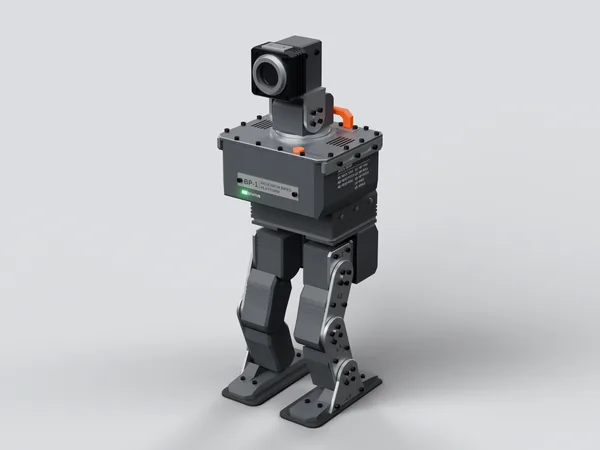
Research biped
Thirteen smart servos, a camera pod on a pan-tilt neck and a machined deck; it stands and crouches in simulation but doesn't walk.
-
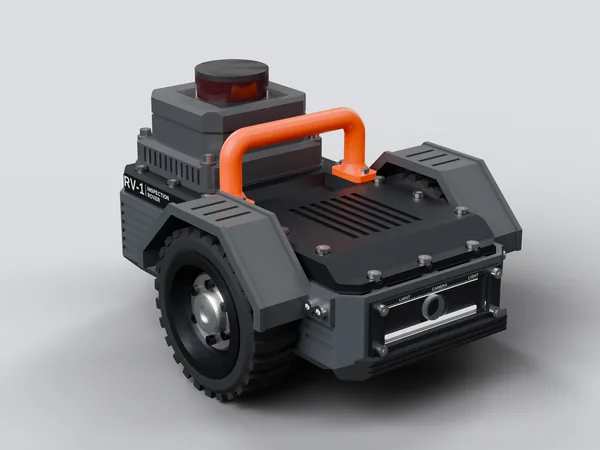
Server room rover
A LiDAR turret, a camera behind a dark front window and an orange carry hoop; it drives 1 m straight in simulation.
-
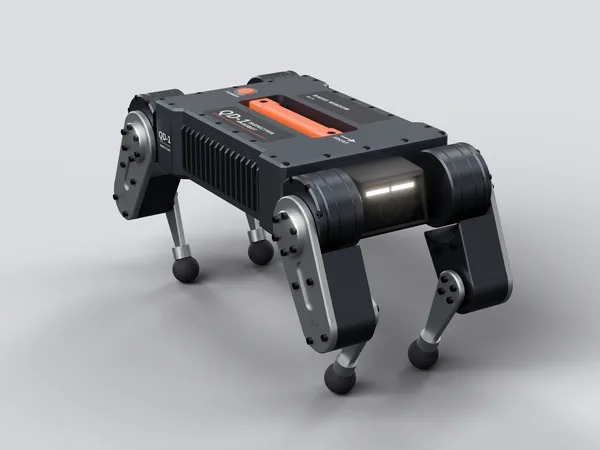
Legged inspection robot
Twelve smart servos inside machined housings, a camera in its nose and an orange carry handle; it stands and crawls slowly in simulation.
-

RF magnetic survey meter
A handheld meter that finds 2.4 GHz radio sources and strong magnetic fields, comparing them rather than measuring them.
-

Five-finger tendon hand
Eleven motors in the forearm pull tendons to sixteen joints in slim fingers; checked for collisions, not yet for grip.
How it will work
You describe the device. Physily works through it one step at a time and stops at each checkpoint so you can approve it, change it, or ask an engineer to review it.
- Spec
Asks you a few questions, then writes down what the device must do and how each feature will be tested.
- Parts
Picks the chip, sensors and battery, and a pre-certified radio module so certification costs less.
- Board
Places and routes the circuit board, checks it against electrical and manufacturing rules, and writes the manufacturing files a board maker needs.
- Case
Designs the case around the board in the look you choose, from toy to industrial, with moving parts like buttons, lids and hinges, and checks that everything fits. Plastic parts start as 3D prints; metal parts go to a machine shop.
- Firmware
Writes the code and builds it. With the board on your desk, a small desktop app flashes the chip and tests it for real.
- Prototype
You order the board and print the case. Physily walks you through putting it together and testing it.
- Sell
Shows the cost per unit from 10 to 5,000 units and the FCC certification path for the US. Then you move to BXNode, our business tools, to send quotes, buy parts and ship.
Every result says how it was checked
Code that compiles isn't the same as a device that works. Physily labels each result, so you know what still needs a closer look.
- Verified on hardware
- Measured on the real chip or with a meter, with a count of how many checks were measured.
- Firmware says pass, not measured
- The firmware reported success, but nothing outside it measured the result.
- Compiles, not tested on hardware
- The code builds. It hasn't run on a board yet.
- Can't check yet: needs a board
- Something has to happen first, and Physily tells you what it is.
What's built so far
Physily joins engines our team already builds and uses. The joined-up product isn't ready yet. Here's where each part stands.


| Firmware (BXForge) | Writes, builds, flashes and checks firmware on real radio chips and low-power microcontrollers. It has written complete LoRa + GPS firmware for our collar that runs end to end with a live gateway. |
|---|---|
| Circuit boards | Picks parts, places and routes boards, checks them, and writes standard manufacturing files. No board it designed has been manufactured yet. That's next. |
| Cases and moving parts | Builds cases around a board with fit checks, plus gears, hinges and joints. It rendered the images on this page. |
| Making | Our collar, ear tag, light tag and gateway are already in factory production. |
| Business tools (BXNode) | Quotes, supplier orders, stock and invoices, in beta. It's sold on its own too, at bxnode.com. |
| Not built yet | One flow that takes a device from a typed idea to a working unit. The beta has to prove that first, with real builds. |
Got an idea for a device?
We invite people in small groups. Sign up, tell us what you'd make, and you could be one of the first.